ADVERTORIAL

Synoshi
Synoshi
 by Douglas Jones
|
January 7, 2026
by Douglas Jones
|
January 7, 2026
I'm writing this at 2:47 AM because I finally understand why my children were getting sicker every day, and it took me six agonizing months to discover the truth.
My name is Sarah Mitchell. I'm 38, mother to Emma (7) and Jake (10), and three months ago I was convinced something terrible was slowly poisoning my family.
Every doctor told me I was overreacting. Every test came back normal. But I watched my healthy, energetic kids deteriorate week after week, and nobody could tell me why.
It started on an ordinary Wednesday when Emma dragged herself downstairs looking completely drained. "Mommy, my tummy hurts."
She didn’t have fever. I could see no obvious signs. Just exhaustion! I sent her to school.
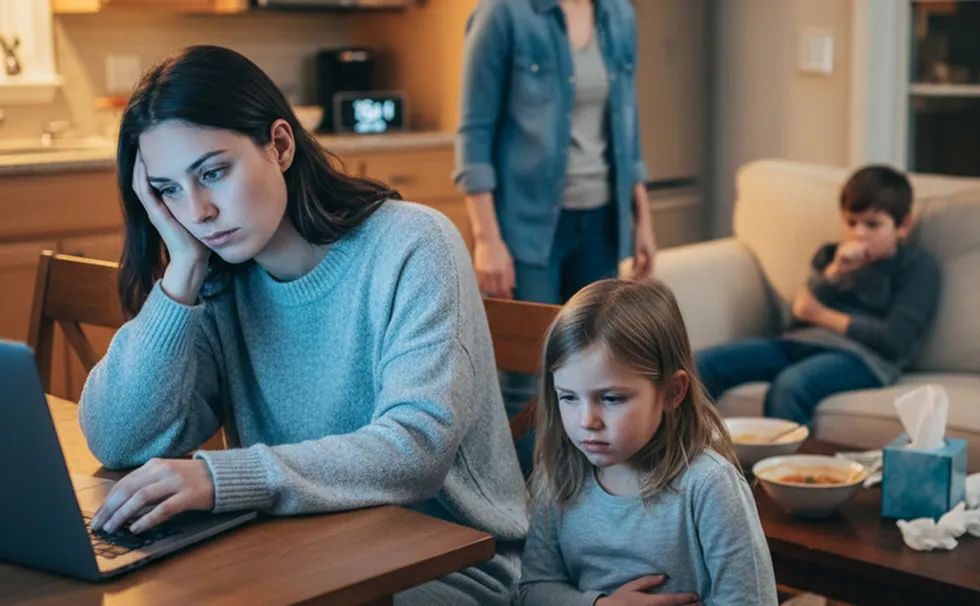
By 11 AM, the nurse was calling—Emma had been to her office three times with nausea and headaches. And to my surprise, within 72 hours, Jake also developed a persistent cough!
And me? I started feeling dizzy spells and bone-deep exhaustion that coffee couldn't touch.
However, my husband Mark was completely fine.
Our pediatrician ran every test imaginable. Blood work, urine samples, throat cultures. Everything came back normal. "Probably just a virus. It'll pass." But it didn't. Emma's headaches intensified. Jake's cough deepened. We went back for more tests. Still normal.
I tested our house for mold (negative), installed carbon monoxide detectors (all clear), switched to organic food, bought a $400 water filter. Nothing changed. By week six, I'd spent over $2,000 chasing answers.
Then Emma collapsed while getting dressed. I rushed her to the ER, heart hammering.
The young ER doctor examined her, then pulled me aside. "Mrs. Mitchell, I think
we might
be looking at anxiety. Children can develop physical symptoms when
stressed."
"She's SEVEN," I said, trying to keep my voice steady.
This wasn't anxiety. Something was poisoning my children, and nobody would listen.
My sister Rachel, a nurse in Boston, called in week eight. "Sarah, you need to see Dr. Michael Chen. He specializes in environmental medicine—he investigates cases where symptoms don't fit normal patterns."
When I explained our situation to his receptionist, she didn't rush me off.
“Dr. Chen is booked three months out, but let me present your case." Two days later, she
called, "He wants to see you Tuesday at 2 PM."
Dr. Chen's office looked like a professor's study—floor-to-ceiling bookshelves, stacks of research papers. He was in his late sixties with sharp, observant eyes. "Tell me everything," he said.
I walked him through the nightmare. He listened without interrupting, then asked questions I'd never heard: "What heating system do you have? Do you run a humidifier? What cleaning products do you use?"
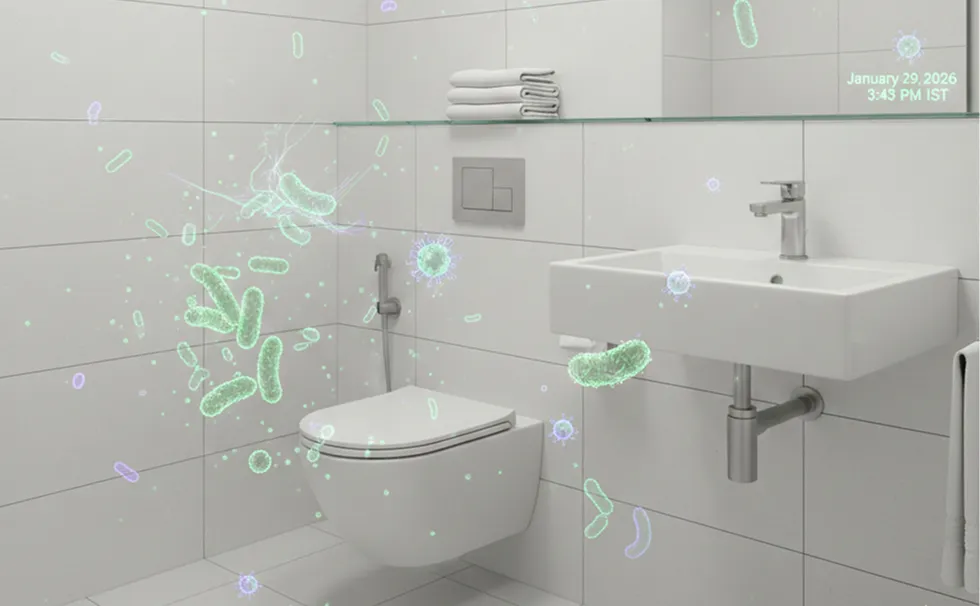
And his final question was. "When was the last time you deep-cleaned your bathroom?"
"I clean it every week," I said defensively.
My face burned. I couldn't remember.
Dr. Chen closed his journal. "Mrs. Mitchell, I don't think your children are sick because
of a virus. I believe it’s your bathroom.”
"But it looks clean," I said weakly.
"That's exactly the problem!” He continued,
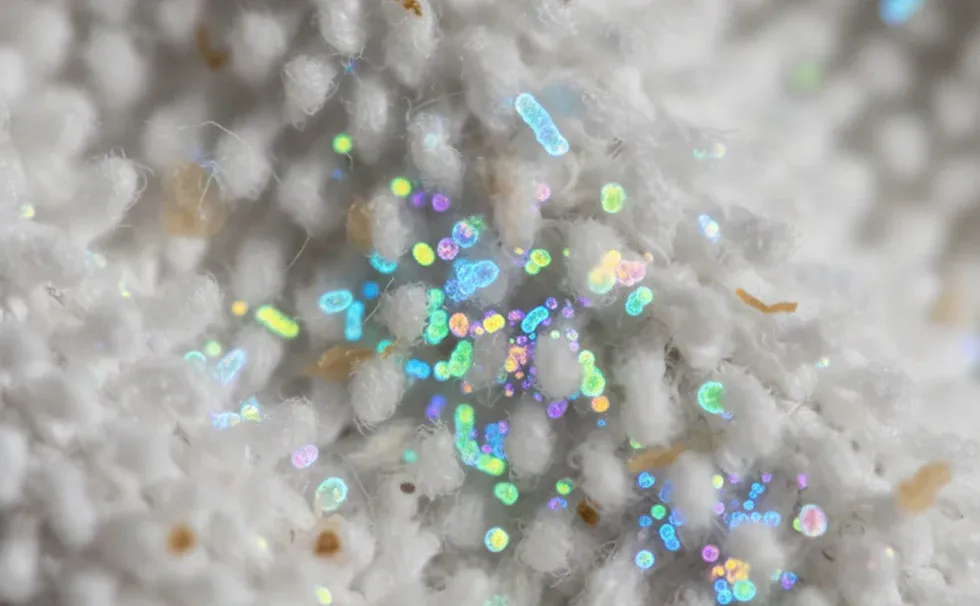
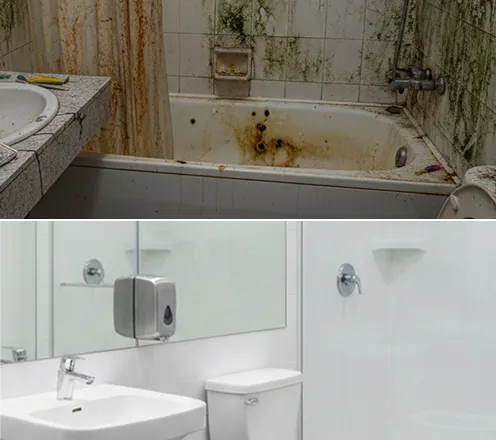
“Most people think clean surfaces mean a clean bathroom. But invisible colonies of bacteria and mold grow in places you can't see, releasing toxins into the air you breathe daily.”
Specific Bacteria: About 14% to 25% of bathroom towels carry E. coli.
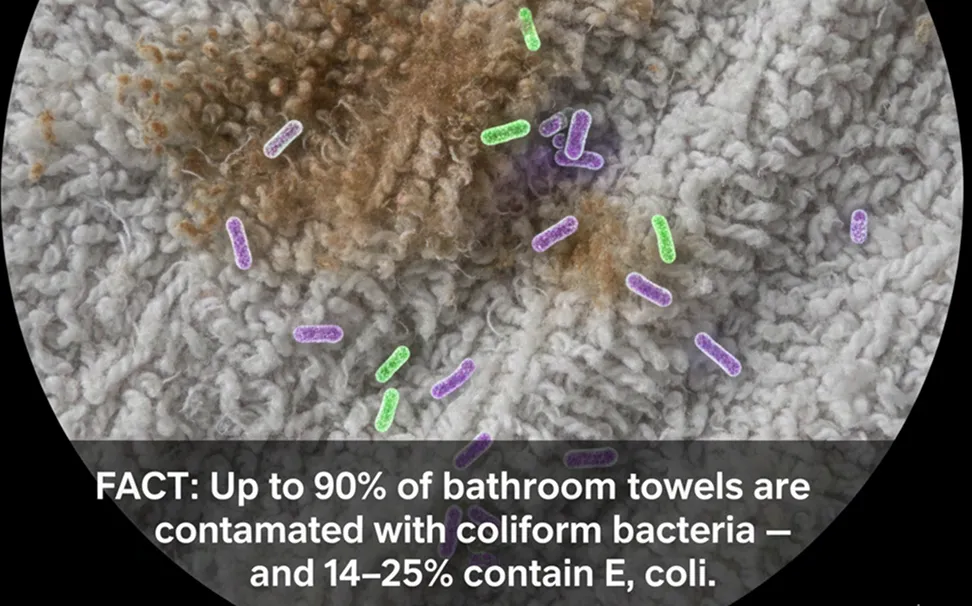
He pulled out a research article. Harvard researchers found that 90% of homes contain dangerous bacterial colonies even after thorough cleaning. The CDC estimates proper deep cleaning could prevent hundreds of thousands of illnesses annually.
Dr Chen asked me to go back home and clean my bathroom the best way I can! He said, “Clean it and I'll come tomorrow for an inspection.”
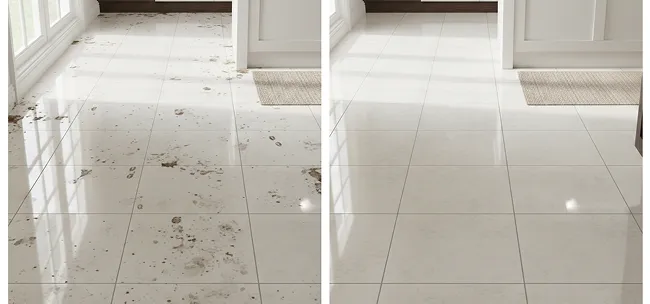
I went home and spent three hours scrubbing until everything sparkled. White toilet, shiny fixtures, spotless floors.
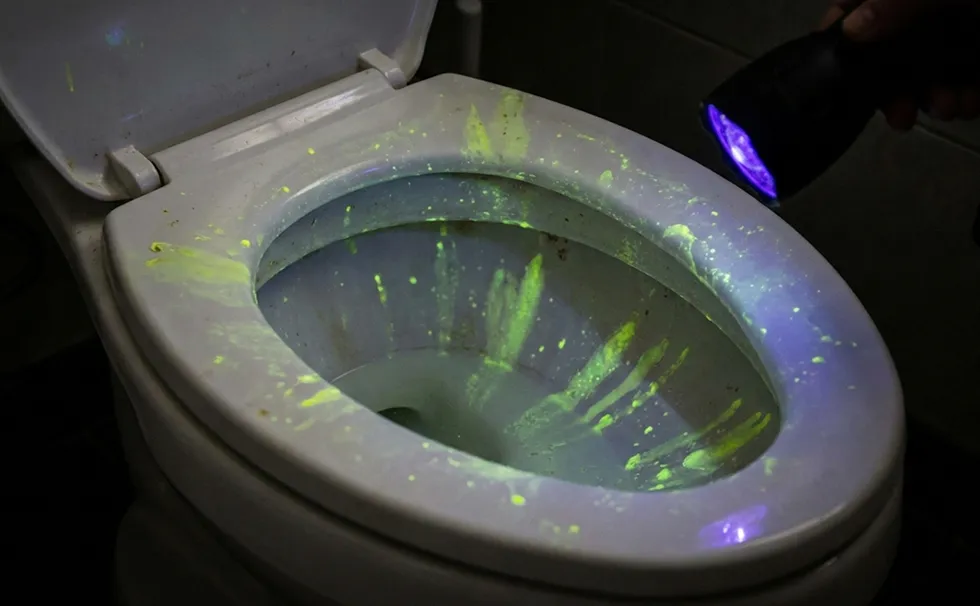
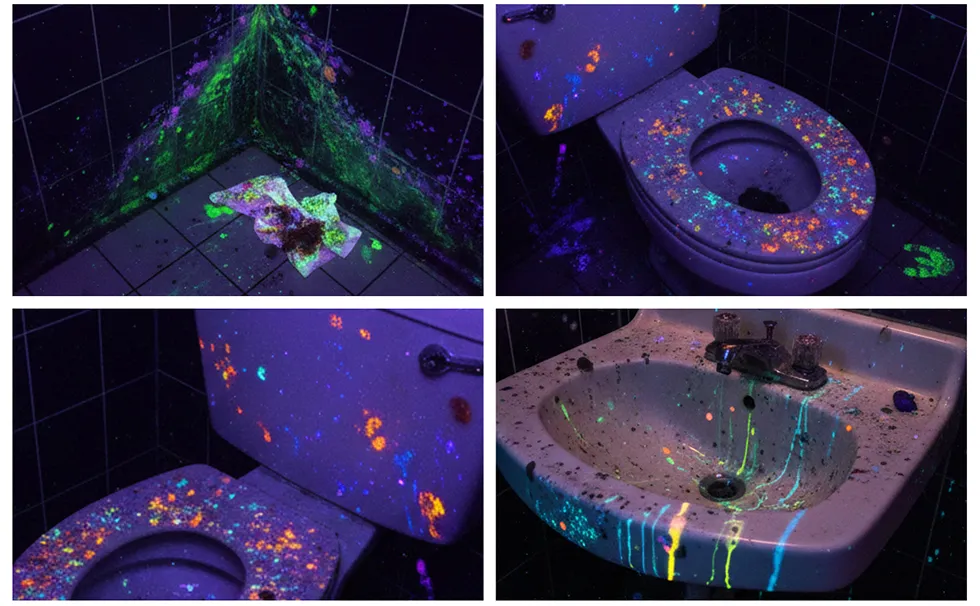
When Dr. Chen arrived, he walked into my bathroom, turned off the lights, and pulled out what looked like a flashlight with an unusual blue glow. “This is a UV detection light. It reveals organic contaminants invisible to the naked eye,” he said.
What I saw next made me physically ill.
Glowing yellow spots appeared everywhere on my "spotless" toilet. The floor around the
base looked like a crime scene. The sink handles lit up.
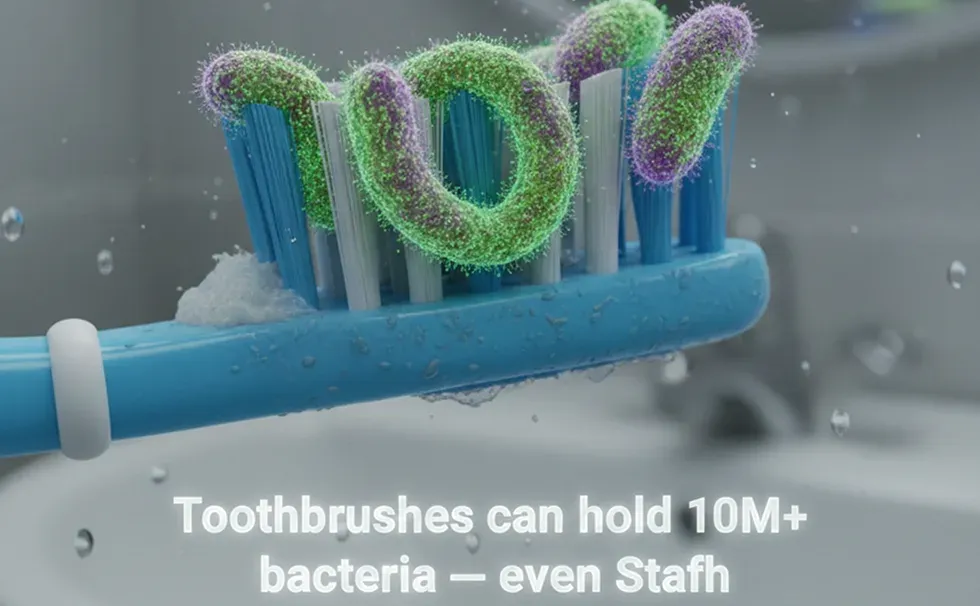
"My God," I whispered. "We've been brushing our teeth..."
I ran the UV light again. The glowing spots were gone. Actually gone.
"With toilet bacteria," Dr. Chen finished quietly. "This is what's in almost every bathroom. Your eyes can't see it, but it's there. And it's making your family sick!"
In Japan, bathroom hygiene is treated completely differently, Dr. Chen explained. They don't just clean surfaces—they eliminate invisible threats. That's partly why Japan has some of the lowest rates of household illness in the developed world."
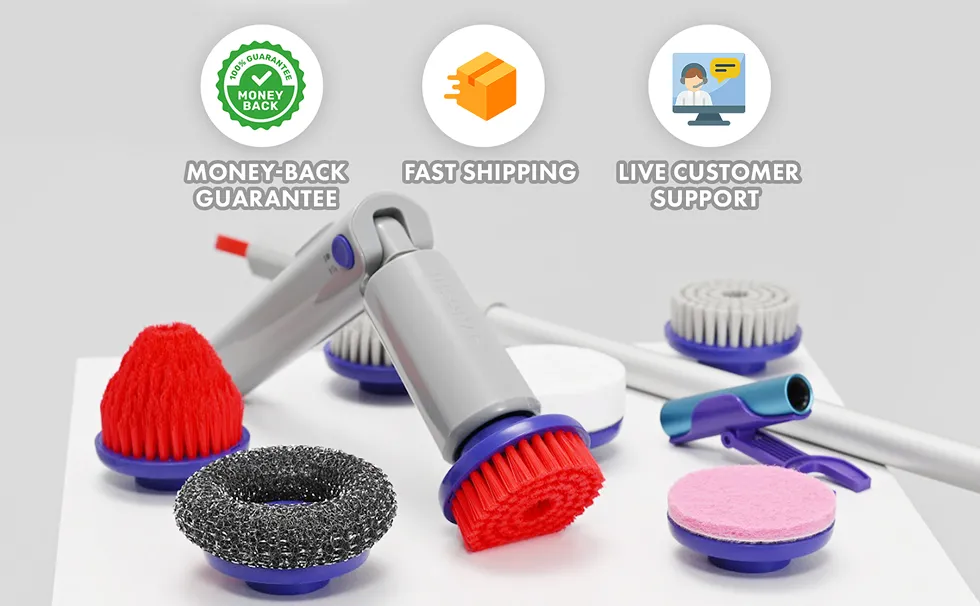
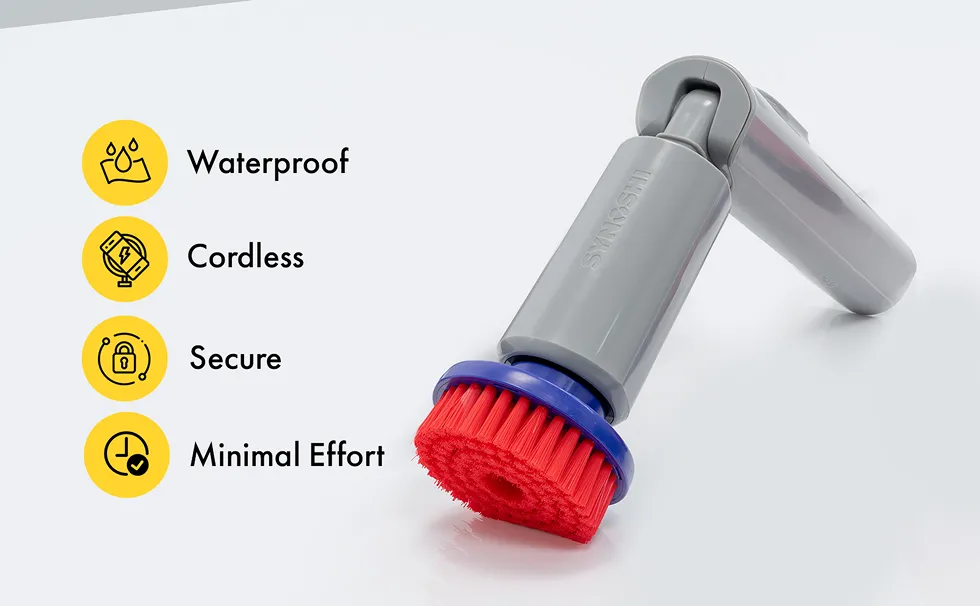
He showed me a video of a device called Synoshi Pro—standard in Japanese homes, only recently available here. It looked like sci-fi: a lightweight cordless brush with UV light that revealed hidden contamination, then eliminated it with specialized rotating brush heads.
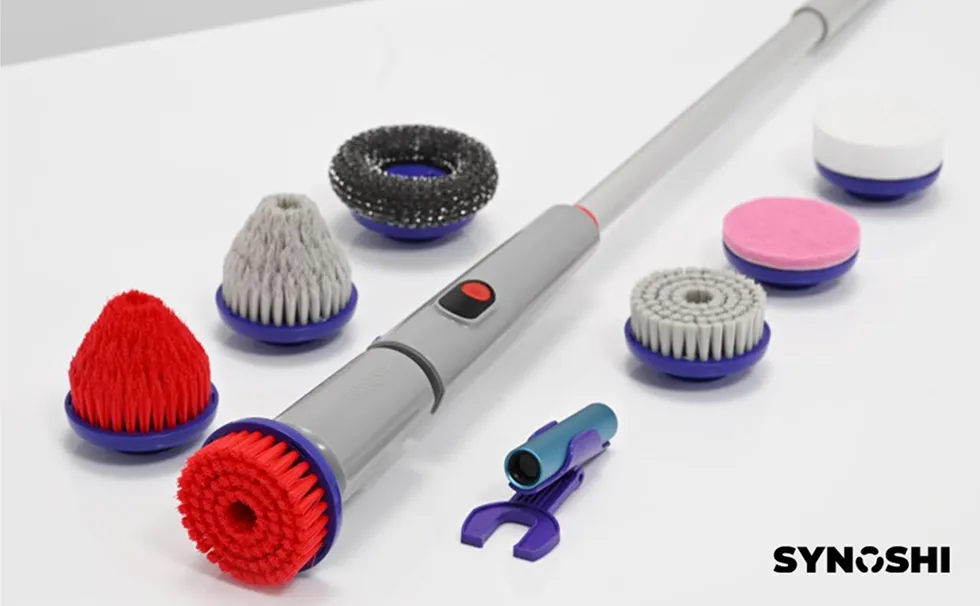
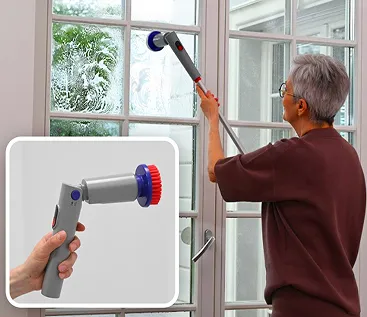
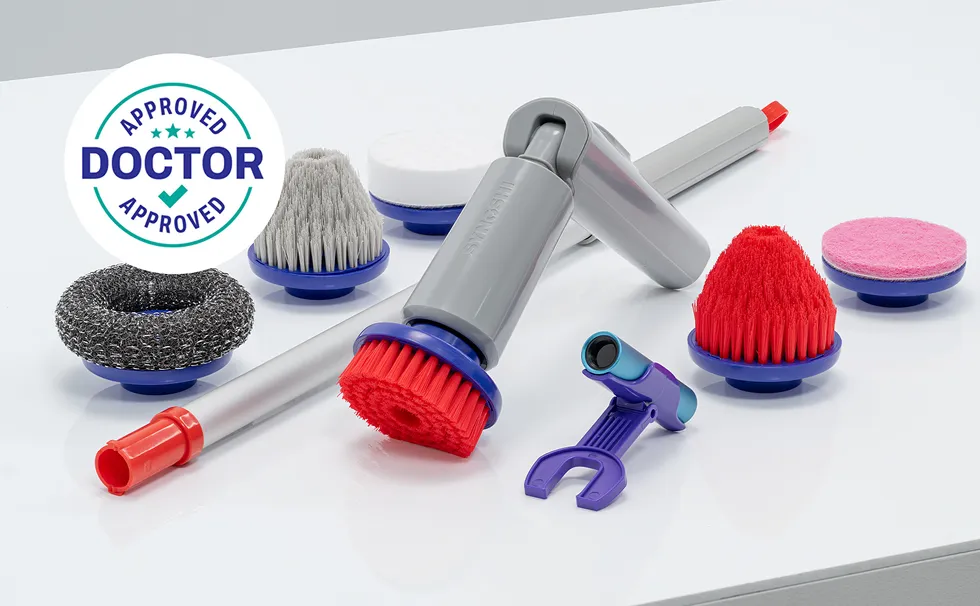
The handle adjusts to different angles so you don't strain your back. It's waterproof, rechargeable, with different brush heads for various surfaces. Most importantly, it eliminates the biofilms and bacterial colonies regular cleaning misses."
I ordered it immediately that afternoon.
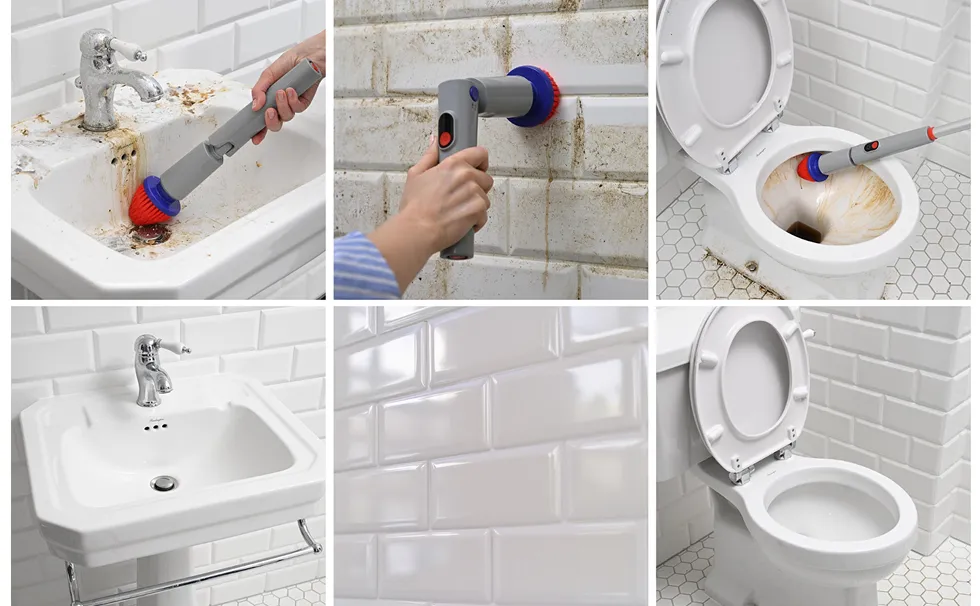
Two days later, I went through my bathroom with the UV detection mode. The contamination was horrifying—behind the toilet, inside grout lines, around drains. Then I switched to cleaning mode and watched the rotating brushes actually remove it. The adjustable handle reached every corner. Within 45 minutes, I'd deep-cleaned areas that would've taken hours traditionally.
That night, Emma slept through without waking. Jake's cough was quieter. I woke up feeling the fog lift from my brain.
Emma's headaches are completely gone. Jake hasn't coughed in five days. I feel like myself again—energetic, clear-headed. Dr. Chen explained that once we eliminated the toxic exposure, our immune systems could finally recover.
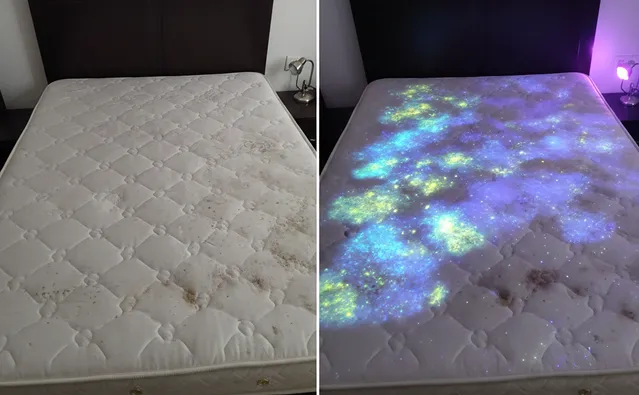
 Patricia from Chicago
"I’ve used the Synoshi Power Spin Scrubber for a few weeks, and it’s completely changed my cleaning routine. It’s cordless, saves time, and the UV light revealed shocking results on our mattress."
 Mikel from New York
"I bought the Synoshi last month because lingering bathroom odors were becoming a real issue. The battery lasts incredibly long—I managed to clean the whole house on one charge. Plus, it’s been very gentle on my joints. Totally worth it"
 Julia from Los Angeles
"Got the Synoshi during a previous sale, and it's been a lifesaver. Being waterproof makes it perfect for stubborn grime in wet areas. The UV feature showed me contamination I never knew existed."
 Thomas from Houston
"Cleaning has never been my favorite, but it’s unavoidable. I gave this a try without high expectations and was pleasantly surprised. The cordless design makes it easy to use, and it does a great job tackling even stubborn dirt."

The Synoshi Pro addresses problems traditional cleaning cannot:
The device costs one-tenth of a professional cleaning service and actually eliminates the source instead of masking it with harsh chemicals.
How long does it run on a full charge?
Up to 2.5 hours of continuous use on its 2,000 mAh battery.
Is it really waterproof?
Yes, IPX5 rated. Safe in showers, around toilets, near sinks. Don't fully submerge it.
How do I change the angle?
Adjustment button locks the handle at 0°, 36°, or 72°.
What comes in the package?
Main unit, USB-C charging cable, user manual, round flat brush head, magic white sponge head
for delicate surfaces.
Can I buy additional brush heads?
Yes, it's modular. Purchase extra heads separately.
How do I switch speeds?
Press power button to toggle between low speed (195 RPM), high speed (235 RPM), and off.
I spent six months, thousands of dollars, and countless sleepless nights searching in all the wrong places. The solution was technology Japanese families had been using for years.
The 60-day money-back guarantee means you can try it risk-free. The 70% warehouse clearance discount makes it more affordable than ever. And the peace of mind from actually seeing and eliminating invisible contamination? Priceless.
If you're tired of wondering why your bathroom never feels quite clean, or worried about invisible threats affecting your family's health, maybe it's time to stop cleaning blindly and start cleaning effectively.